Legal Systems: Protecting What Matters Most
You don't need a law degree. You need a system for the legal decisions you already make every week — most of which you're currently making with zero system at all.
Feedback loop: an annual legal document review — the one recurring check that catches an outdated will, an expired power of attorney, or a lease clause you forgot you agreed to.
The Legal System Loop. Most people already run half of it — reading documents when handed to them. The missing half is the review step.
You signed your lease renewal in about ninety seconds. You skimmed to the signature line, saw the rent number hadn't obviously exploded, and clicked through. Three months later you're staring at a $140 "amenity fee" you don't remember agreeing to, buried in a clause you never actually read.
You still don't have a will, even though you keep meaning to write one. You said yes to a "quick freelance thing" for a friend of a friend with nothing in writing, because asking for a contract felt awkward. Your power of attorney, if you even have one, names your college roommate, who you haven't spoken to in six years.
None of this makes you careless. It makes you exactly like almost everyone else: a reasonably careful adult operating in a legal system nobody ever taught you to navigate, making binding decisions under time pressure, with no process, and hoping nothing goes wrong.
Here's the reframe: this isn't a knowledge problem you fix by "learning the law." It's a systems problem. And it's fixable the same way every other undesigned system in your life is fixable — starting today.
The Root Cause
ROOT CAUSE: No system was ever builtLegal literacy is not taught as a life skill. You were never handed a process for reading a contract, storing a document, or knowing when a legal document needs to be revisited. So the vast majority of adults interact with the legal system exactly once per document: at the moment someone hands it to them, under pressure to sign quickly and move on.
That single-moment interaction is the design flaw. Legal exposure rarely comes from one dramatic mistake. It comes from the absence of a recurring process: nobody reviews the lease before it auto-renews, nobody updates the will after the divorce, nobody revisits the freelance agreement that was never actually a written agreement in the first place.
Below is how each of the five DB root causes shows up specifically in the legal domain — and the corrective direction for each.
The Mechanism: Why the Gap Is Wider Than It Feels
It's tempting to assume legal exposure is rare, or that it only happens to people who make obviously bad decisions. The data says otherwise. The gap between the legal decisions people make and the legal understanding behind those decisions is close to universal — and it compounds quietly, document by document, until a crisis forces it into view.
Notice what these four numbers describe together: people skip reading before signing, people don't have basic protective documents in place, and when a legal problem does hit, most people get little or no qualified help resolving it. This isn't a story about a few careless individuals. It's a story about a system nobody was ever given.
The mechanism, once you see it, is simple: legal documents arrive as one-time events, not as an ongoing system. A lease gets signed once and reviewed never. A will gets written once, if it gets written at all, and then forgotten for a decade. Without a designed review process, every legal document silently drifts out of date, out of relevance, or out of your favor — and nothing tells you when it happens.
The Design: Building a Legal Review System
You do not need to become your own lawyer. You need a lightweight, repeatable process that catches problems before they become crises. The same four-step frame applies here as everywhere else in your life systems.
Step 1 — Diagnose
List every standing legal document currently governing your life: lease or mortgage, employment agreement, insurance policies, any estate documents, any recurring service contracts. For most people, this list is longer than expected, and most items on it have never been reviewed since the day they were signed.
Step 2 — Design
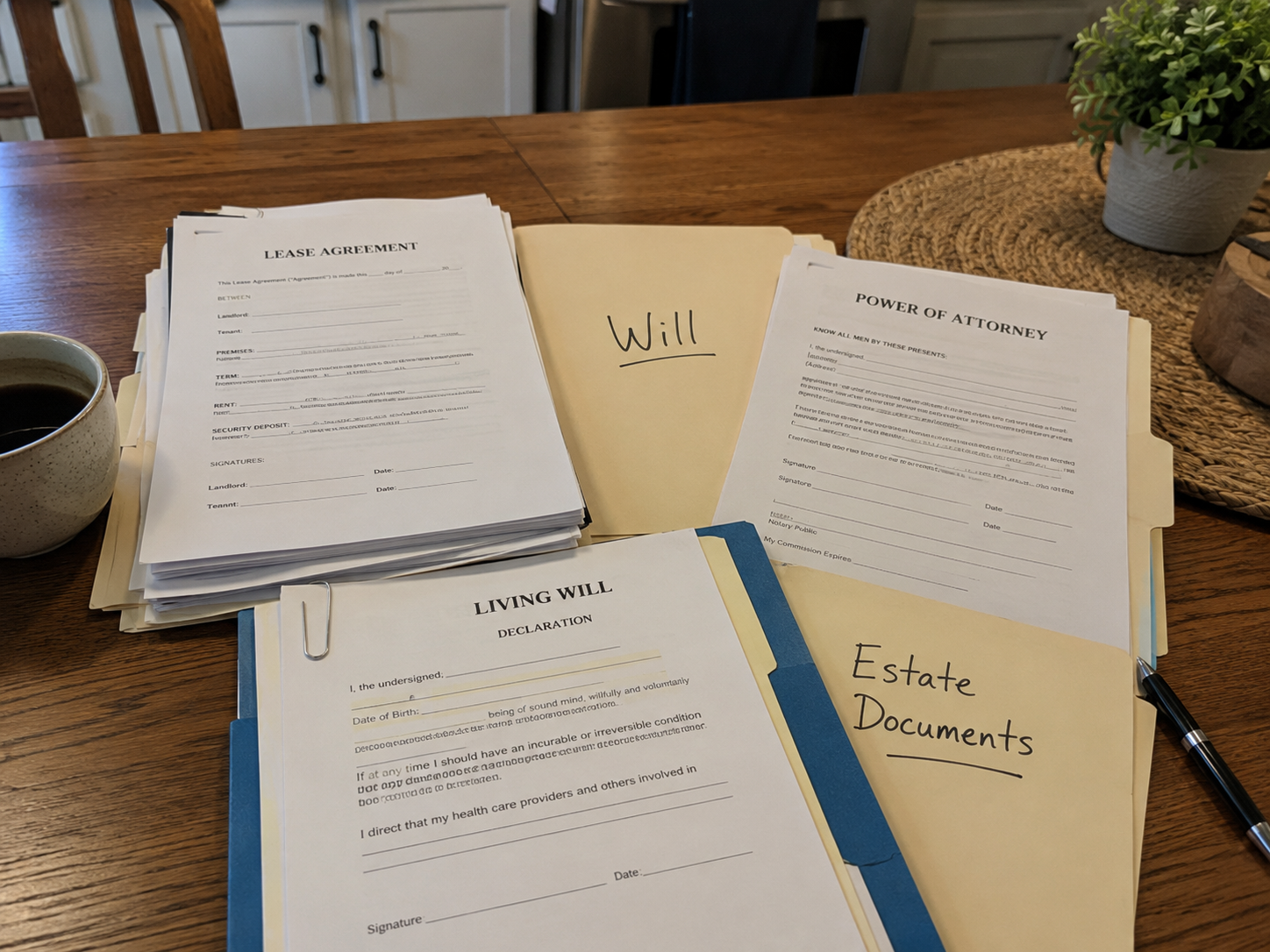
Build one system, not five. A single folder, physical or digital, holding every document. A single recurring calendar entry: one annual 20-minute review, plus a rule that you read before you sign anything new, even when it's uncomfortable to ask for a moment.
Step 3 — Implement
Start with the document that carries the most exposure right now, not the one that feels most urgent emotionally. For most people that's the estate basics: a will, a healthcare directive, and a power of attorney. For thin-evidence domains like this one, where peer-reviewed behavioral research is limited, a credentialed practitioner reference is the strongest available starting point.
Step 4 — Iterate
Once a year, open the folder. Check every document for accuracy: names, dates, relevance to your current life. Update what's stale. This single habit, repeated annually, closes the gap that the statistics above describe — not because you became a legal expert, but because you built the review step nobody ever taught you to build.
Start Your Legal Document Folder
Open one folder — physical or digital — and title it "Legal." Spend the next 20 minutes finding your three most exposure-heavy documents: your lease or mortgage, any estate document you have, and your primary employment or insurance agreement. Put them in the folder.
2. Add the three documents.
3. Set one recurring calendar reminder, one year from today, titled "Annual Legal Review."
That folder is your first system. You have just done something most adults never do: turned a pile of one-time signatures into a designed, reviewable process.