Designing a Life That Gets Stronger Under Stress
Surviving disorder is not the ceiling. Some systems are designed to come out the other side of it stronger than they went in.
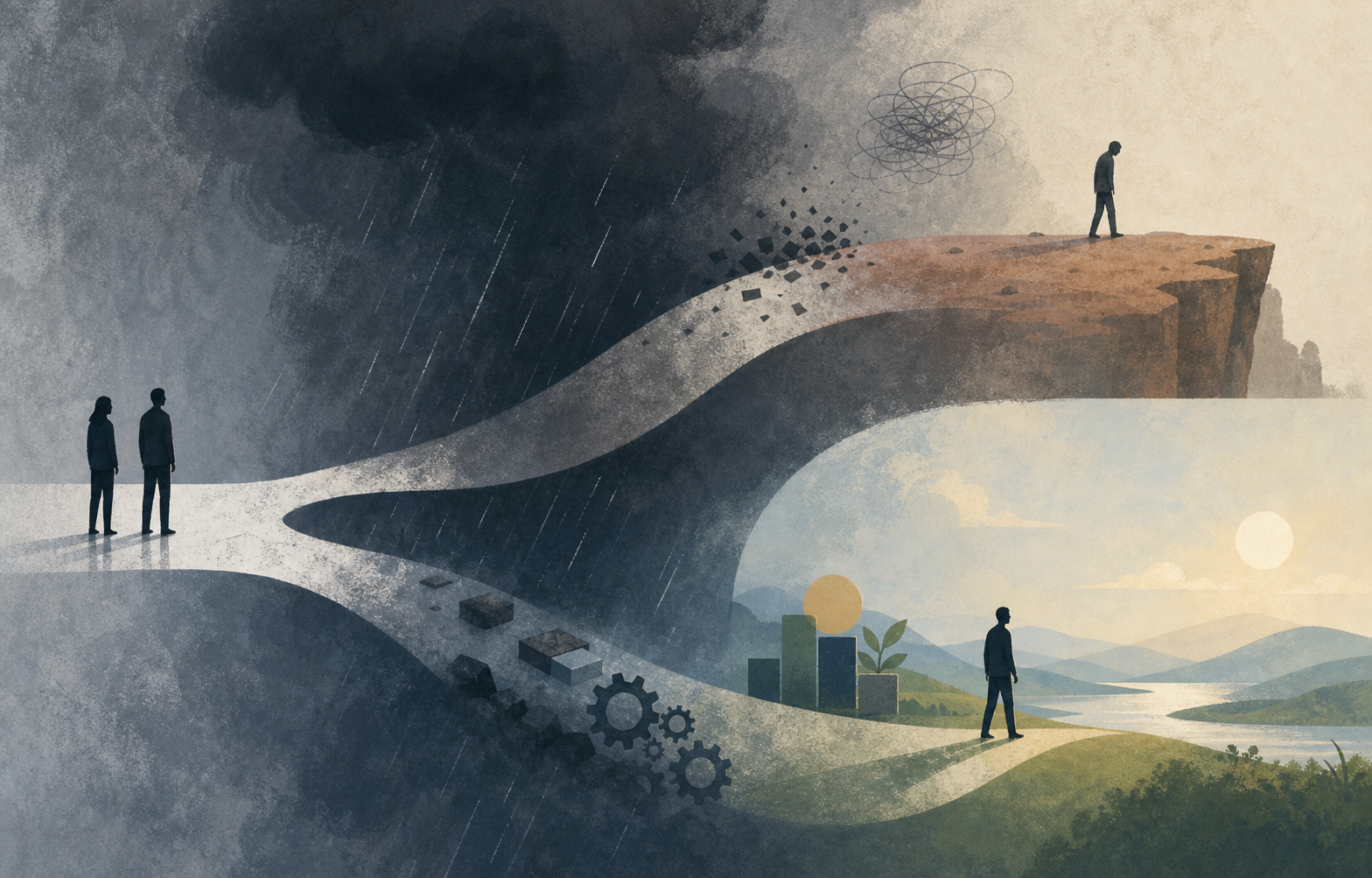
Two people go through the same rough year: a job change, a move, a stretch of financial tightness. One of them comes out the other side more brittle, more anxious about the next disruption, running the same systems as before but with less margin than they started with. The other comes out of it with a bigger emergency fund than before, a clearer sense of what they can actually handle, and noticeably less fear about the next hard year, whenever it comes.
Same category of disruption. Opposite outcome. The difference wasn't luck, and it wasn't personality. It was whether their systems were designed to merely absorb the hit, or designed to extract something from it.
Most personal systems are built to survive disorder at best. Very few are built to actually get stronger from it. That gap is not automatic; it takes a deliberate design choice, and it's the last piece of the methodology this series has been building toward.
The Root Cause
ROOT CAUSE: The system cannot tolerate disturbanceThis is the third article in this series to touch this root cause, and each one sits at a different tier. "Building Systems That Survive Bad Days" is about robustness: absorbing an ordinary daily capacity dip without collapsing. "Personal Risk Management" is about preparedness: identifying the disruptions most likely to hit you and mitigating them in advance. Antifragility is the tier above both: designing a system that doesn't just survive the disruption or prepare for it, but uses it as an input that makes the system measurably better than it was before.
A merely robust system looks identical before and after a shock, assuming it held. An antifragile system looks different, and better, after the shock than it did before. The distinction matters because most people stop at "did I survive," which caps how much a hard period can actually improve their life going forward.
This isn't about seeking out hardship. Genuine trauma and severe adversity are not a design methodology, and nothing here suggests otherwise. This is about how a system responds to the ordinary-sized disruptions that are already going to happen, and whether it's built to only absorb them or to also learn from them.
The Mechanism: How Systems Actually Get Stronger From Stress
The clearest evidence for this pattern comes from biology, in a well-documented phenomenon called hormesis: a moderate, recoverable dose of stress triggers an adaptive response that leaves the system with greater capacity than it had before the stress occurred. Resistance training is the most familiar version. Muscle fiber experiences small, controlled damage under load, and the repair process rebuilds it with more capacity than it started with. The stress isn't incidental to the improvement. It's the mechanism of it.
The same pattern shows up at the organizational level, not just the biological one. Research on high-performing teams found that groups with higher psychological safety, meaning members felt safe admitting a mistake or flagging a near-miss, actually reported more errors, not fewer, while simultaneously outperforming lower-safety teams over time. The errors weren't hidden and repeated. They were surfaced, examined, and used to improve the underlying process.
Put the two findings together and the mechanism is consistent across scales: a system gets stronger from stress specifically when the stress is survivable, visible, and reviewed, not when it's hidden, avoided, or oversized. That's a design specification, not a personality trait.
Feedback loop: each cycle's output becomes the baseline capacity for the next stressor.
The Design: Building Systems That Use Disorder Instead of Just Surviving It
Designing for antifragility means intentionally introducing small, bounded stressors into a system, with a defined review step afterward, so the disorder produces data instead of just damage.
Step 1 — Diagnose
Pick one system that has survived a disruption in the past without getting any better for it, your budget after an unexpected expense, your schedule after a chaotic week, your health after an illness. If it looks the same after the event as before, it was robust at best. That's your target for upgrading.
Step 2 — Design
Introduce a small, deliberately chosen, genuinely recoverable version of that same category of stressor. If unexpected expenses are the pattern, run a real month on a tighter budget than usual, on purpose, to find where the actual slack is. If a chaotic week broke your schedule, deliberately overbook one day to find which parts of your routine are load-bearing and which are decorative. The stressor should be uncomfortable, not damaging.
Step 3 — Implement
Run it, and pay attention. Don't just note whether the system survived. Note specifically what strained, what broke, and what held with room to spare. That detail is the entire value of the exercise.
Step 4 — Iterate
Use what you found to raise the baseline, not just patch the weak point back to where it was. If the tighter budget month revealed $150 of genuine slack, that becomes the new floor for your emergency buffer, not a one-time observation you forget by next quarter. Each cycle should leave the system with a higher starting capacity than the one before it.
Find One System That Only Ever Survives
Write down one system in your life that has weathered a disruption before without ever getting stronger for it. Design one small, safely recoverable version of that stressor you could run in the next two weeks, and write down exactly what you'll review afterward: what strained, what broke, what held.