Preventive Maintenance for Life: Why Reactive Living Always Costs More
Nothing in your life waits politely until you're ready. Preventive maintenance is how you stop paying the emergency price for ordinary problems.
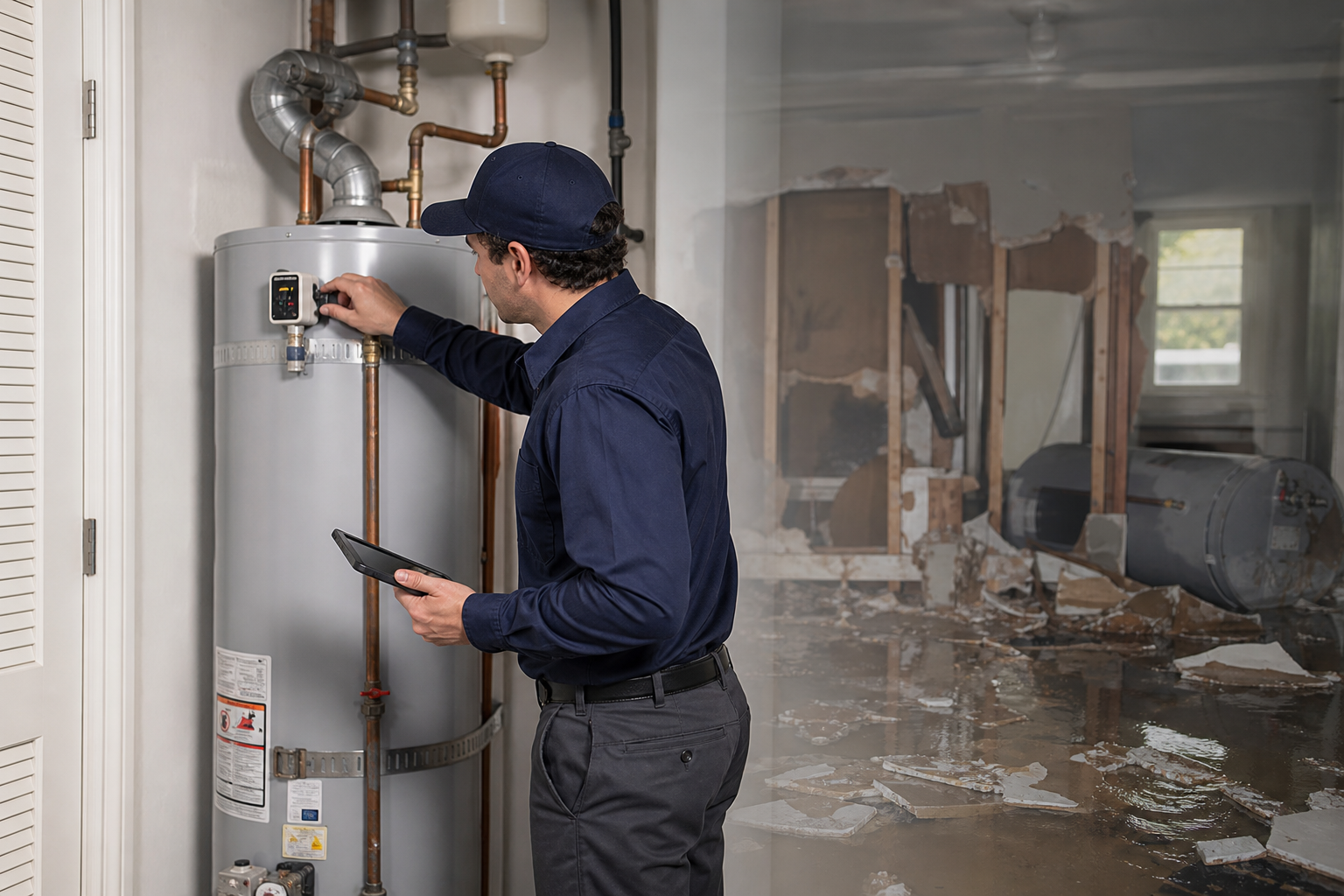
The water heater gave you no warning. One Tuesday it was fine. The next morning there were three inches of water on the basement floor, a $1,400 emergency plumber bill, and a ruined rug you'd forgotten you still owned. You hadn't ignored your water heater on purpose. You simply didn't know it needed anything from you until the moment it very loudly told you otherwise.
This same pattern repeats across nearly every domain of adult life. You don't go to the dentist until something hurts. You don't look at your credit report until you're denied for something. You don't think about your car's brakes until they make a noise you can't ignore. In every case, the system was sending smaller, cheaper signals long before it sent the expensive one. You just weren't checking for them, because nobody ever taught you that checking was a thing you were supposed to do.
Engineers solved this exact problem decades ago, for machines, and the solution transfers almost without modification to the rest of your life. It's called preventive maintenance, and it is the single highest-leverage habit most adults have never been taught to build.
The Root Cause
ROOT CAUSE: No system was ever builtReactive maintenance and preventive maintenance describe two completely different relationships with the same system. Reactive maintenance means you respond after something fails. Preventive maintenance means you act on a schedule, before failure, based on how the system actually degrades over time. The first one feels cheaper because, for a while, it is: you spend nothing on the water heater for years, right up until the year you spend $1,400 in a single morning. The second one feels like an unnecessary chore because nothing is currently broken, which is exactly the point of doing it.
The root cause underneath almost every "surprise" failure in adult life is not bad luck. It's that no preventive system was ever built for that domain in the first place. There was no calendar entry for the water heater's expected service life. No quarterly review of the credit report. No standing dental appointment. The failure wasn't sudden. It was simply unmonitored until it became unmissable.
Reactive maintenance isn't cheaper. It's the same cost, deferred and compounded, paid all at once at the worst possible time.
The Mechanism: Why Prevention Is Structurally Cheaper
This isn't a matter of opinion or frugality culture. It's documented, federally tracked engineering economics. The U.S. Department of Energy's Federal Energy Management Program has spent decades studying maintenance strategy across federal facilities, and the pattern holds with remarkable consistency: planned maintenance is cheaper than emergency repair, not marginally, but structurally, because of what each one actually has to pay for.
Notice the actual mechanism described there, because it's the part that transfers directly to your own life: reactive costs aren't just "the same repair, done later." They include the secondary damage that happened while the problem went unmonitored, plus a premium for the lack of planning, plus a smaller version of the original problem you could have caught and ignored entirely. The water heater example again: a $40 annual flush-and-inspect appointment versus a $1,400 emergency replacement plus flood cleanup plus a ruined rug. The unit was the same unit. The conditions of the repair were not.
The same compounding pattern shows up outside the maintenance literature, in domains Deadband Life tracks closely. Financial resilience research shows that people without a financial buffer aren't just unprepared for emergencies, they're structurally more exposed to every other disruption that intersects with a money problem, because the absence of a small, regular preventive habit (saving consistently) compounds into a much larger, reactive exposure later.
Health management research finds the identical structure: the strongest predictor of good outcomes isn't access to care when something goes wrong, it's whether structured, proactive self-care behaviors are happening on a regular cadence, before symptoms appear at all.
Money, health, home, the engineering and the research point at the same underlying mechanism from different directions. A small, scheduled check costs little because it catches problems while they're still small. A skipped check doesn't eliminate the cost. It just lets the cost grow, unmonitored, until the system forces your attention at the worst, most expensive possible moment.
The Design: Building a Preventive Maintenance Schedule for Your Life
You don't need a facilities team. You need a short list of recurring checks and a calendar that actually reminds you, because memory is not a maintenance system.
Step 1 — Diagnose: Find Your "Run to Failure" Systems
List the systems in your life you've never scheduled a check for: car, home, health, finances, even relationships. For each one, ask honestly: do I only address this after it's already a problem? If yes, that system is currently running reactive, by default, not by decision.
Step 2 — Design: Set the Interval Each System Actually Needs
Different systems degrade on different timelines, so they need different intervals. A water heater check is annual. A budget review is monthly. A dental exam is twice yearly. Match the interval to how fast the system can quietly go wrong, not to how often you feel like dealing with it.
Step 3 — Implement: Put It on a Calendar, Not a Mental Note
A preventive system that lives only in your memory is not a system. It is a hope. Put every recurring check on an actual calendar with a real reminder, the same way you'd schedule a recurring meeting. The entire value of preventive maintenance comes from it happening on schedule, regardless of how busy or motivated you feel that week.
Step 4 — Iterate: Adjust the Schedule as Systems Age
A ten-year-old water heater needs more frequent attention than a new one. A growing emergency fund needs less monthly urgency once it reaches its target. Review your preventive schedule annually and adjust intervals based on what you've actually learned about how each system behaves, the same continuous-improvement loop from Article #16, applied here to the maintenance calendar itself.
Schedule Your First Three Preventive Checks
Open your calendar app and create three recurring events right now, for the three systems in your life most likely to fail expensively if left unmonitored:
2. One health system (dental, vision, an annual physical) — set a recurring reminder at the interval your provider recommends.
3. One financial system (credit report check, emergency fund contribution) — set a recurring monthly or quarterly reminder.
You don't have to do any of the actual maintenance today. You just have to make sure the reminder exists, so the next check happens on a schedule instead of by accident, or worse, by emergency.