Building Your First Emergency Fund
You don't need $10,000 saved to be prepared. You need a system that puts money aside before life finds a reason to spend it first.
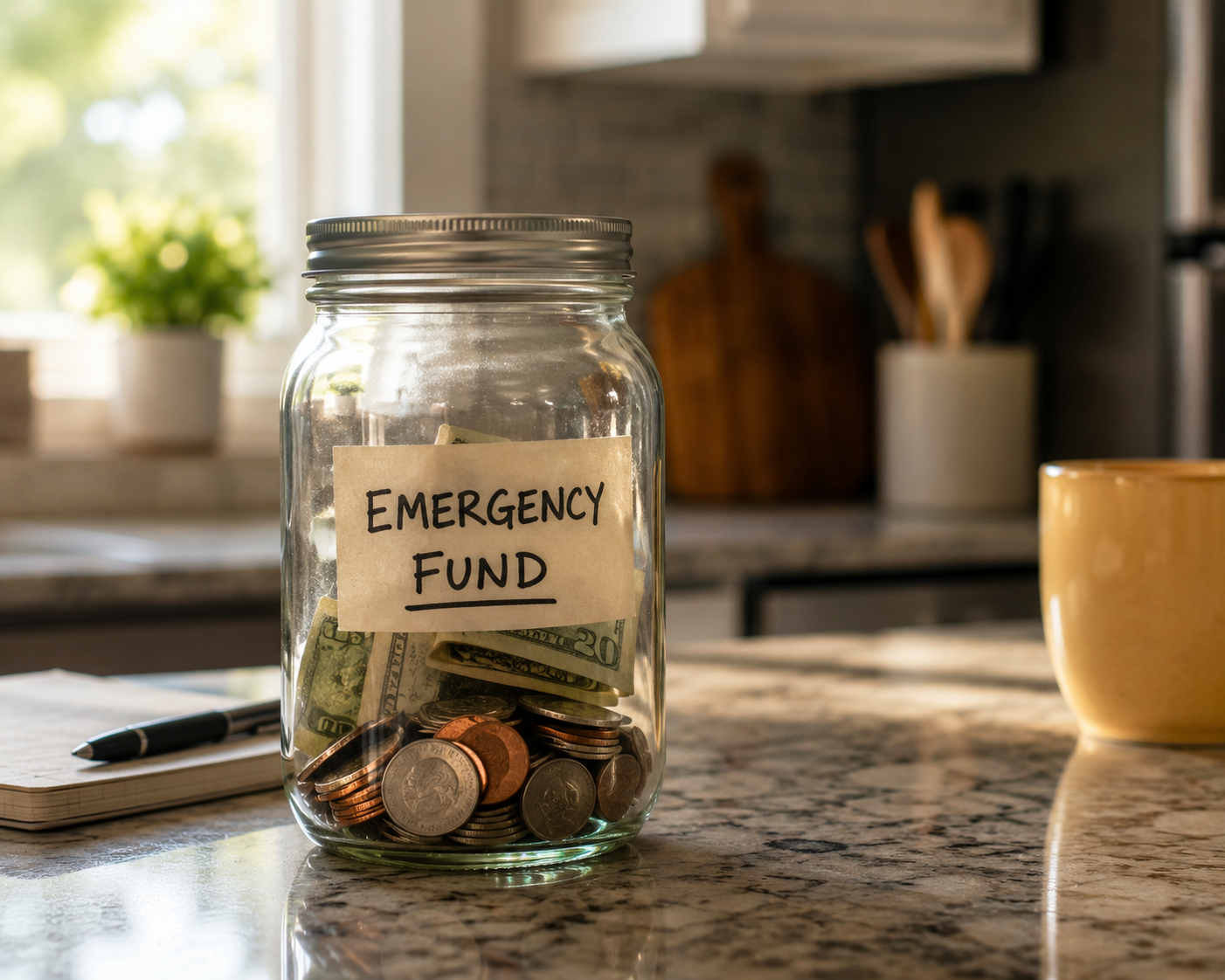
Your car makes a sound it didn't make last week. You already know what that sound costs to fix, and you already know you don't have it sitting anywhere convenient. So you do the math on which credit card has the most room left, and you tell yourself you'll deal with the balance later.
This isn't a one-time bad week. It's a pattern. Every unexpected expense, the car, the dentist, the appliance that finally gives out, lands the same way: as a crisis with no cushion underneath it. You're not bad with money. You've just never had a system whose entire job is to absorb exactly this kind of hit.
And it compounds. Each time a surprise expense goes on a card instead of coming out of savings, next month's budget starts a little tighter than this month's did, because now there's a balance to pay down on top of everything else. The emergency didn't just cost you the repair bill. It cost you next month's margin too.
That system has a name, and it's simpler than most financial advice makes it sound. It's an emergency fund. Not an investment account. Not a long-term savings goal. A designed buffer with one job: making the next surprise expense boring instead of catastrophic.
The Root Cause
ROOT CAUSE: The system cannot tolerate disturbanceA budget without an emergency fund is a system with zero resilience. It can balance perfectly every month and still collapse the first time something unplanned shows up, because nothing in the design accounts for disturbance. The expense isn't really the problem. The absence of a buffer layer is.
This is exactly how widespread the gap is right now.
That 24% doesn't include everyone who has some savings but nowhere near enough to cover a real disruption. The honest number of households one surprise bill away from debt is considerably higher.
Why "Just Save More" Doesn't Work
Most people don't lack an emergency fund because they don't understand why it matters. They lack one because nobody designed a system for building it, so the goal stayed abstract: "save more," with no number, no account, and no automatic mechanism behind it. A goal without a mechanism is a wish, not a system.
The mechanism that actually works isn't motivation. It's automation paired with a small, specific first target. "Save three to six months of expenses" is correct advice and a terrible starting point, because the number is large enough to feel impossible, so most people never start at all. A system that begins with an unreachable target produces paralysis, not progress.
There's a second, quieter mechanism at work too: visibility. Money that sits in your primary checking account, mixed in with rent, groceries, and everything else, doesn't feel like a fund. It feels like float, and float gets spent. The moment savings has its own account, ideally one that isn't sitting on the home screen of your banking app, it stops competing with this week's spending decisions. That separation is doing real structural work, not just psychological comfort.
The Design: A Three-Tier Emergency Fund System
Skip the single, intimidating savings goal. Build the fund in three tiers, each with its own purpose and its own finish line, so progress is visible long before you reach "fully prepared."
Tier 1 — The Starter Buffer: $500–$1,000
This tier exists for one purpose: absorbing the small disruptions, a car repair, a vet bill, a broken appliance, that currently go on a credit card. It is not your real safety net. It is the system that stops small problems from becoming debt. Build this first, and build it fast, even if that means redirecting money you'd normally put toward a different financial goal for a month or two. Tier 1 is the floor everything else gets built on.
Tier 2 — The One-Month Cushion
Once Tier 1 exists, the next target is one full month of essential expenses: housing, food, utilities, transportation, minimum debt payments. This tier covers the gap between a disruption and your next paycheck without touching Tier 1. It's also the point where most people start to feel a genuine shift, not relief from a single bill, but the background sense that a bad week won't immediately become a bad month.
Tier 3 — The Full Reserve: Three to Six Months
This is the tier most advice starts with, and the one most people never reach, because nobody builds a house starting with the roof. Three to six months of essential expenses is the target that protects against job loss or a major income disruption. It's built last because by the time you reach it, the habit of contributing is already running on its own, the automatic transfer has become invisible, routine infrastructure rather than a decision you have to keep making.
The fix is in that last line. An automatic transfer, scheduled for the day after each paycheck lands, removes the dependency on willpower entirely. The system runs whether you remember it or not, which is exactly what makes it a system instead of an intention.
Open the Account and Automate Tier 1
Open a separate savings account today, one you don't see on your main banking app's home screen, specifically labeled for emergencies.
That single transfer is Tier 1, started. You no longer have an emergency fund "someday." You have one running automatically, today.