Prepping for Home Ownership
Falling in love with a listing isn't the same as being ready to buy it. Readiness is a system — and almost nobody builds it before they start scrolling.
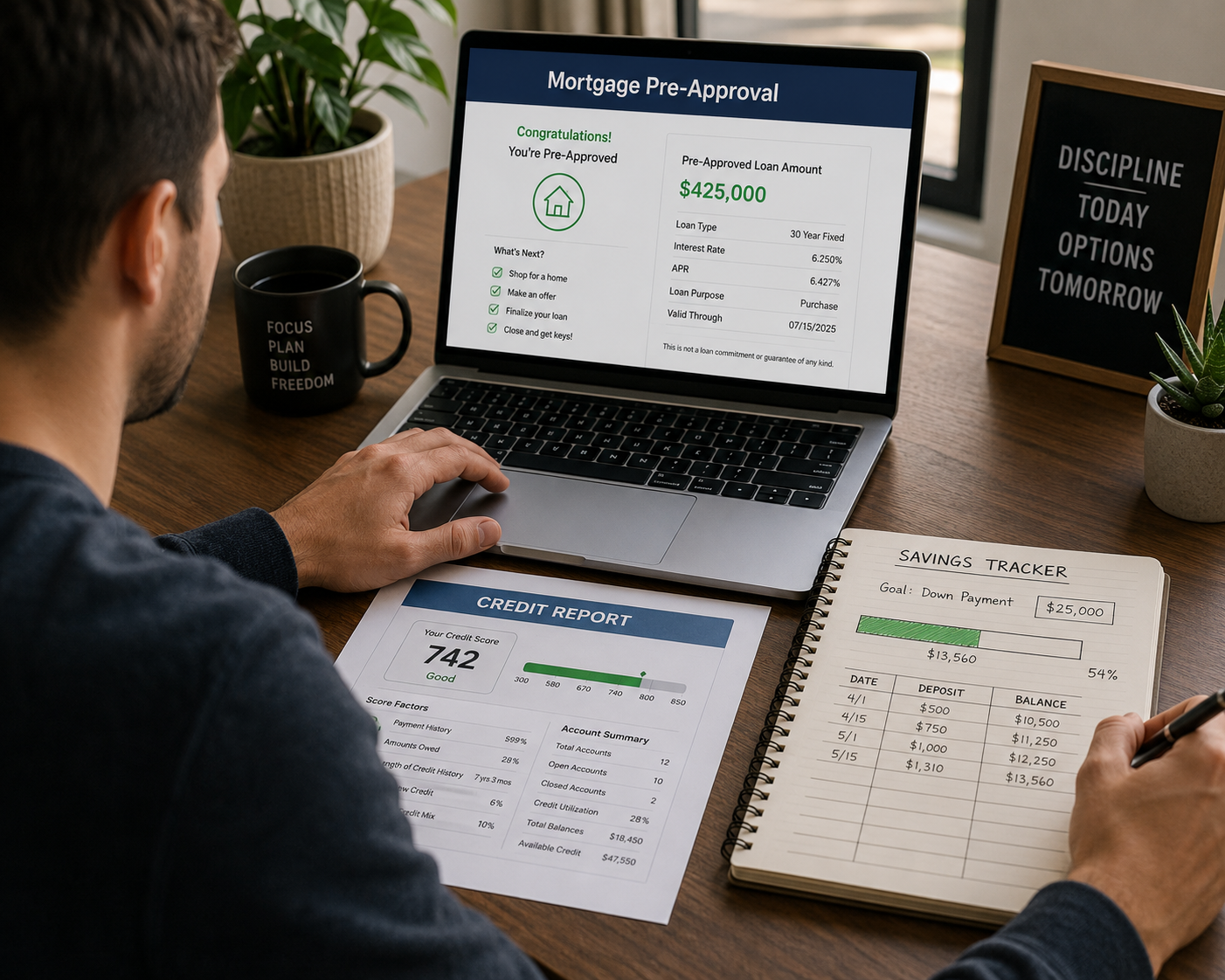
You've been scrolling listings for months. You have a folder of saved homes, a mental list of neighborhoods, and strong opinions about kitchen layouts. What you don't have is a pre-approval letter, a clear number for how much you'd need at closing, or any real idea what your credit score would qualify you for.
Then you find the one. You reach out to an agent, feel the momentum build, and somewhere in the process discover you're not actually ready: the down payment is short, the credit score needs work, or the closing costs you never budgeted for eat into the cash you thought you had. The excitement curdles into scrambling.
This isn't bad luck. It's a sequencing problem. Most people start the home-buying process by looking at homes, when the actual first step is building a readiness system — one that tells you, honestly and in advance, what you can afford and what you still need to fix before you're in a position to make an offer.
The Root Cause
ROOT CAUSE: No system was ever builtNobody teaches home-buying readiness the way they teach, say, a college application timeline. There's no default checklist handed to first-time buyers, so most people build their own process from scratch, out of order, starting with the part that's the most fun: looking at homes.
The actual readiness system has three components — credit, savings, and a realistic closing-cost buffer — and all three take time to build. Skipping straight to house-hunting doesn't skip that work. It just moves it to the worst possible moment: after you've already found the house you want.
The Mechanism: What "Ready" Actually Looks Like
The popular image of a down payment is 20%. The current data tells a different, more useful story — and shows just how much readiness varies by how prepared a buyer actually is going in.
The down payment is only part of the number. Closing costs — lender fees, title insurance, appraisal, escrow setup — typically add another 2% to 5% of the purchase price, due on top of the down payment, not out of it. On a $400,000 home, that's $8,000 to $20,000 that a lot of first-time buyers never explicitly budget for until the final week of the process.
The Design: Building Your Readiness System
Real readiness has three parts, and they're sequential: fix what needs fixing on your credit first, then build the savings target, then confirm the number with a lender — all before you start seriously looking at listings.
Step 1 — Diagnose
Pull your credit report and know your actual score, not a guess. A stronger score directly affects the interest rate you'll qualify for, which affects your monthly payment for the life of the loan. This is the cheapest, highest-leverage thing to fix before you do anything else.
Step 2 — Design
Calculate a real target number: your down payment goal (start with 10% of a realistic price range, not 20%, if that's what current buyers are actually doing), plus a separate closing-cost buffer of 2–5% of that same price range, plus a small cushion for the moving and immediate-repair costs that show up in the first month.
Step 3 — Implement
Get pre-approved, not just pre-qualified, before you start touring homes. Pre-approval involves an actual lender verifying your income, debt, and credit, and it gives you a real number instead of an estimate — the number you'll actually be shopping within.
Step 4 — Iterate
Revisit your savings target and credit score every few months while you're preparing to buy. Interest rates, local prices, and your own financial picture all shift, and a stale pre-approval from a year ago won't reflect today's numbers.
Pull Your Credit Report and Set Your Number
Check your credit score through your bank or a free credit monitoring service, and write down one real savings target: a realistic price range, times 10% for a down payment, plus 2–5% more for closing costs.
2. Pick a realistic home price range for your area.
3. Calculate your target: (price × 10%) + (price × 2–5%) = your real savings goal.
That number is your first readiness system. Now, when you do find the listing you love, you'll already know whether you're ready to act on it.