What Every Household Should Prepare For
Most people find out what they should have prepared for during the failure itself. This is the checklist that gets there first.
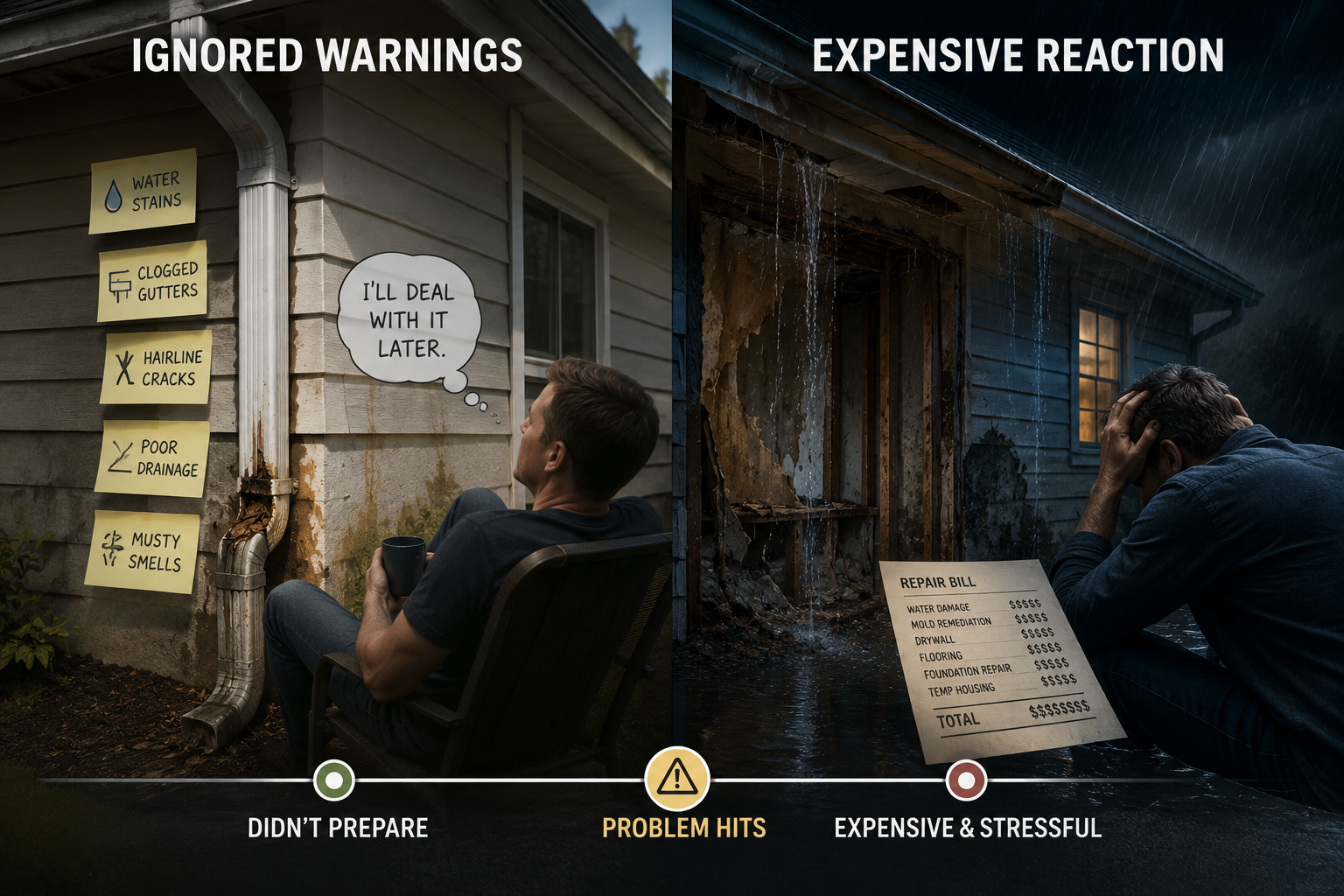
The water heater doesn't send a warning email. It just stops, on a Saturday, usually the one weekend you had plans. So does the HVAC system, the roof, and the electrical panel your inspector mentioned once and you never thought about again.
Here's the pattern almost every homeowner and renter shares: they find out what every household should prepare for only after the thing that needed preparing for has already failed. By then, you're not preparing anymore. You're reacting, usually at the most expensive possible moment, to a problem that gave plenty of warning signs you simply weren't set up to catch.
This article is the checklist that flips that order. Four systems, one root cause, and a short list of things worth doing this month instead of during the emergency.
The Root Cause: Why Reactive Households Get Hit Hardest
ROOT CAUSE: No system was ever builtAlmost nobody manages home maintenance with an actual system. Most households run on reactive management: nothing happens until something breaks, and then everything happens at once, expensively, with no process for deciding what matters most.
This isn't a discipline problem. It's a design gap. Homeownership and renting both come with dozens of systems, plumbing, electrical, HVAC, roofing, appliances, running in parallel with no shared maintenance calendar, no shared cost record, and no shared decision plan for when (not if) one of them fails.
You don't need to predict which system fails first. You need a system for handling whichever one does.
The fix isn't more vigilance. It's a small, explicit checklist, reviewed on a schedule instead of triggered by a crisis. That's the mechanism behind the rest of this article.
What Every Household Should Prepare For (The Four Systems That Fail First)
In engineering, tolerance is the limit a system can absorb before it fails outright. Your Threshold is the household version: the point of deferred maintenance, ignored noise, or accumulated wear past which a small fix becomes an emergency repair. Most home systems don't fail suddenly. They cross their Threshold quietly, months before the visible failure.
Research on homeownership costs consistently finds the same gap: most people significantly underestimate the true, ongoing cost of maintaining a home, which is exactly why so few households budget for it proactively.
Here's what that looks like broken down by system:
- HVAC — the single most expensive system to replace on an emergency basis; filters and service intervals are the cheapest insurance you'll ever buy.
- Plumbing — slow leaks and aging supply lines rarely announce themselves before a burst pipe does.
- Roofing — damage is often invisible from the ground until water is already inside the house.
- Electrical — the system homeowners are least equipped to self-diagnose, and the one where guessing is most dangerous.
How to Build Your Household Preparedness System
You don't need to overhaul your home management overnight. You need three small structures, built once and reviewed on a schedule.
1. A Maintenance Calendar
One list, four systems, with the manufacturer's recommended service interval for each. Reviewed quarterly. This is the single highest-leverage habit in this entire article.
2. A Cost Record
Track what each system actually costs you per year, not what you assumed it would cost when you moved in. This closes the gap the FHFA research above identifies, and it tells you which system to budget for first.
3. A Failure Response Plan
For each of the four systems, write down: who you'd call, what the rough emergency-repair cost range looks like, and whether you have the buffer to cover it. If you haven't built that buffer yet, Article #57 walks through exactly how.
Build Your Four-System Checklist
Open a blank document. List your home's four core systems: HVAC, plumbing, roofing, electrical.
That document is your maintenance calendar's first draft. It takes under twenty minutes, and it's the difference between a scheduled repair and a surprise one.